
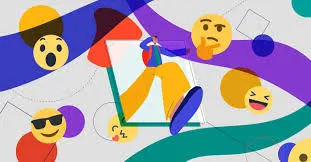
In the digital era where messaging apps, social media, and online chats dominate human interaction — the manner in which we communicate has transformed dramatically. Typed text, by default, lacks many of the subtle cues of face-to-face interaction: tone of voice, facial expression, body language. Without those, messages can often come across as flat, ambiguous, or even misconstrued.
Enter emojis small pictorial icons that accompany, complement, or even replace words. These are more than just decorative additions; emojis have evolved into a powerful layer of expression that enriches and reshapes how we communicate online. By embedding emotional and contextual cues into text, emojis help bridge the expressive gap left by the absence of human nonverbal signals.
In this essay, I explore how emojis shape online communication: from their origins to their functions; from their ability to enrich empathy and clarity to the risks of ambiguity and misinterpretation; and finally, what this means for the future of digital interaction.
Origins & Evolution of Emojis
The journey of emojis traces back decades. Even before modern emojis, people used emoticons combinations of ASCII characters like :-) or :( — to express mood or tone.
But the modern emoji era began in Japan. A key figure is Shigetaka Kurita, who in the late 1990s helped design one of the first emoji sets — a collection of colorful pictograms intended for digital messaging.
Over time these pictograms were standardized through the Unicode Consortium, ensuring that emojis display consistently across devices and platforms worldwide.
Thus, what began as optional fun icons evolved into a universal, cross-platform visual vocabulary — effectively giving birth to a whole new “language” for the digital era.
Why Emojis Matter: Emotional Expression & Richer Communication
• Bridging Emotional Gaps in Text
One of the most fundamental roles of emojis is to fill in what plain text lacks — non-verbal cues like tone, emotion, and intent. In face-to-face communication, we rely on facial expressions, vocal inflection, body language; online, we lose all that. Emojis help compensate.
Research supports this: a 2025 study found that people routinely rely on emojis to communicate their emotions, sometimes using them in place of words entirely. Emoji use correlated with better “emotional self-expression,” “mood regulation,” and “emotional satisfaction.”
Thus, emojis allow users to convey feelings like joy, affection, sarcasm, surprise, or support — which might otherwise be ambiguous or misinterpreted via plain text.
• Enhancing Clarity, Tone, and Intent
Beyond pure emotion, emojis help mark the tone or intent behind a message. A simple “ok” can seem cold or abrupt in text. But “ok 🙂” or “ok 👍” communicates warmth, friendliness, or approval more clearly. In effect, emojis serve as an emotional or tonal punctuation, shaping how a message is perceived.
In digital workplaces or remote environments too, emojis have practical uses. For example, adding a “thumbs up” or “smile” can soften feedback, express appreciation, or foster positivity — sometimes more effectively than plain text.
• Universal & Cross-linguistic Communication
Since emojis are pictorial rather than textual, they can transcend language barriers. A heart ❤️, a laughing-crying face 😂, a clapping-hands 👏 — these are widely understood across linguistic and cultural boundaries, providing a form of “visual language.”
For global platforms or international audiences, this is invaluable. Rather than relying on a common spoken/written language, people can communicate feelings, reactions, or simple ideas just by icons.
• Efficiency and Engagement
Emojis can also make communication shorter and more efficient. Instead of writing “I am so happy for you,” one might send “😄🎉”. This saves time and space — especially in informal chats or social media. In addition, the visual appeal and expressiveness of emojis often make conversations more engaging, fun, and emotionally resonant.
The Complexity: Ambiguity, Misinterpretation, and Cultural Differences
While emojis offer many benefits, they also introduce complexity. Their interpretation can vary widely depending on cultural background, context, age group, and even sender–receiver relationship.
For instance:
- The same emoji might be perceived differently by people from different cultures — what’s friendly or affectionate in one context might seem sarcastic or confusing in another.
- Emojis embedded in ambiguous text can shift how that text is perceived. A message intended as sarcastic or critical might seem friendly with a wink 😉 — or vice versa.
- Overuse of emojis, or mixing too many in a message, may make the communication seem unserious or unprofessional — especially in formal contexts like business or academic correspondence.
A 2025 qualitative study among university students noted that while emojis generally enhance expressiveness, misunderstanding remains common if users do not consider cultural and contextual nuance.
Thus, emoji use is powerful — but must be managed thoughtfully, especially when clarity and cultural sensitivity matter.
Impact on Language, Relationships & Digital Culture
• Changing How People Write & Think
Some scholars view emojis as part of a broader shift in how language adapts to digital media. Text messages, chats, social-media posts — these are more fluid, informal, and often mix textual and visual elements. Emojis contribute to that evolution, acting not just as decoration but as meaningful communicative units in their own right.
Over time, emojis have become intimately integrated into everyday communication — for many, they are second nature. This changes expectations: when recipients see a plain text message, they might implicitly expect emotional cues or tone, and their interpretation may be influenced by the presence or absence of emojis.
• Strengthening Social Bonds & Emotional Connection
In interpersonal chats — with friends, family, romantic partners, or colleagues — emojis often help create a warmer, more personal vibe. They add warmth, playfulness, empathy. For people separated by distance (e.g. remote friends, long-distance relationships, remote work), emojis help maintain emotional closeness and reduce the cold impersonality of text.
In contexts like customer service or business communication too, emojis — when used appropriately — help humanize interactions. A friendly emoji can make a message feel more personal and less transactional.
Moreover, some empirical studies from remote work platforms have shown practical effects: for example, on GitHub, developers who used emojis were found less likely to drop out, and emoji usage correlated with faster issue resolution and greater participation — suggesting emojis can influence engagement and collaboration even in professional or technical communities.
• Creating New Cultural Norms & Shared Visual Language
As emojis spread globally, communities — across regions, age groups, and languages — have started to build shared or group-specific conventions for meaning. An emoji might carry certain connotations among teens in one country, but a different meaning among older users or in another region.
These norms evolve over time: certain emojis rise in popularity (and sometimes fade) depending on generational preferences. The shifting meaning of some emojis shows how dynamic and culturally embedded this “language” has become.
Challenges, Risks & Limitations of Emoji Communication
However useful as emojis are, they come with certain drawbacks, limitations, and risks. Over-relying on them or using them without sensitivity can lead to miscommunication, confusion, or even unintended consequences.
Ambiguity and Misinterpretation
One of the main issues is that emojis are not universally interpreted the same way. Cultural background, social context, age group, and personal experience influence how a given emoji is perceived. What seems friendly or affectionate in one context may be taken as sarcastic or mocking in another.
Moreover, design differences across devices/platforms can cause the same emoji to appear different — potentially altering the intended meaning.
Research also shows that when the text and emoji are incongruent (e.g. a serious message with a cheerful emoji, or a sad message with a neutral emoji), the communication can become confusing, ambiguous, or misleading.
Thus, emojis are not a guarantee of clarity — and, in some cases, might add complexity rather than simplifying communication.
Over-Simplification of Complex Emotions
While emojis are good at expressing basic emotions — happiness, sadness, laughter, surprise — they often fall short when it comes to nuanced or complex feelings. A heart ❤️ might indicate love, affection, or friendship, but it cannot capture layers of emotion like longing, regret, mixed feelings, or subtle irony.
As some researchers argue, emojis cannot fully substitute the depth, subtlety, and complexity of human language. They are more like emotional accentuators or markers, not full replacements for expressive writing.
Thus, in contexts requiring depth — serious discussions, emotional support, nuanced debate — relying only on emojis may result in oversimplified or shallow communication.
Context-Dependence & Social Norms
Emoji meaning often depends heavily on context — the relationship between sender and recipient, cultural or regional background, platform norms, and the medium (private chat, public post, work message). What works among close friends may backfire in a professional environment or with unfamiliar audiences.
Moreover, as research among adolescents shows, emoji usage patterns vary with age, relationship closeness, and social norms — meaning that interpreting an emoji correctly often requires shared context or shared social codes.
Therefore, misuse or misreading of emojis is a real risk — especially in multicultural or generationally diverse contexts.
Risk of Informality or Unprofessionalism
While emojis can humanize communication, in certain contexts — like formal writing, professional emails, academic or legal communication — they may come across as unprofessional, childish, or inappropriate. Overusing emojis, or using them without discretion, may undermine the seriousness or credibility of a message.
In business communication settings, although some studies note benefits of using emoticons for softening tone and improving interactions, it’s also true that emoji usage must be carefully calibrated to maintain professionalism.
Over-reliance and Reduced Verbal Expression
Another potential downside is that over-reliance on emojis might discourage users from expressing themselves verbally — reducing the richness of language use. As people lean more on emojis for emotional expression, the habit of crafting expressive sentences, using varied vocabulary, or articulating complex thoughts may decline.
In other words: while emojis supplement communication, they might also displace more nuanced linguistic expression.
The Future of Emojis & Digital Communication
As digital communication continues evolving, emojis are likely to play an increasingly important role. Some possible trends:
- Wider vocabulary & more expressive icons: As new emojis are added, users get more nuanced ways to express emotions, actions, or abstract ideas. This may make digital conversations richer and more varied.
- More context-aware usage: As cultural and generational differences in emoji interpretation become more recognized, people may become more careful and deliberate in choosing emojis based on audience — leading to more sensitive and effective communication.
- Integration in professional and remote work communication: As shown by research in developer communities, emojis may increasingly become part of digital workflows, helping to recreate some of the social and emotional cues lost in remote work.
- Visual language evolution: Emojis may continue to evolve as a semiotic system — a kind of shared visual language that complements (or in some contexts, even replaces) parts of textual communication. For many, emojis are already second nature.
Conclusion
Emojis have emerged as far more than decorative icons or casual chat accessories. They are now integral to how we communicate online — embedding emotion, tone, nuance, and context into what would otherwise be dry text. They help bridge the gap left by the absence of non-verbal cues in digital communication; they enable cross-linguistic expression; they enrich social bonding and collaboration; and they shape new norms of digital language.
However, their power comes with responsibility. Because interpretation can vary by culture, context, and generation, using emojis thoughtfully — understanding your audience, being aware of possible ambiguity — matters. Overused or misused, emojis can mislead, offend, or dilute meaning.
As digital communication continues to evolve, emojis will likely grow in importance and subtlety. For now, they remain one of the most powerful tools we have to humanize our online words — to laugh, to empathize, to connect, to belong.